Wild Rose: A Thoughtful Embroidery Design for Real Projects
As a designer who’s digitized over 300 machine embroidery designs—and reviewed hundreds more—I opened Wild Rose expecting another delicate floral motif. What I found was something quieter, more grounded: a single wild rose rendered with restrained elegance, not fussy perfection. It doesn’t shout. It breathes. That subtle distinction matters—especially when you’re stitching for real people, real products, and real expectations.
First Impressions: Softness With Structure
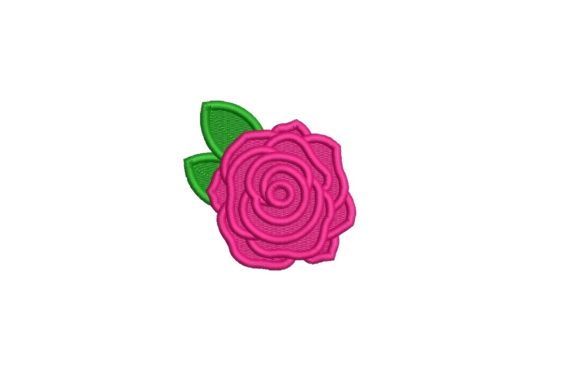
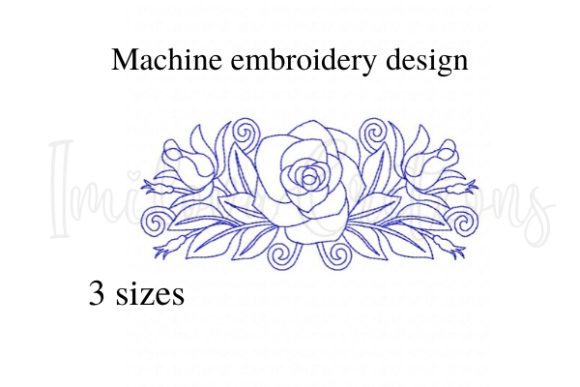
Wild Rose lands like a sigh of relief in the Single Flowers category. Its silhouette is organic—not symmetrical, not overly stylized—but clearly intentional. The petals curve gently outward, the stem has just enough bend to feel alive, and the leaves taper naturally without sharp corners or awkward angles. There’s no excessive detail, no unnecessary satin stitch borders crowding the edges. Instead, it uses thoughtful fill stitch gradients and clean running stitch accents that suggest texture without demanding precision.
This isn’t a design built for showy centerpieces or dense applique layers. It’s made for the quiet confidence of a handmade product—the kind that feels personal, not mass-produced. I immediately pictured it stitched on a linen tea towel for a wedding gift, or centered on a cotton tote bag for a local botanical boutique.
Where Wild Rose Shines (and Where It Asks for Care)
I tested Wild Rose across three real-life projects: a baby onesie (cotton interlock), a medium-weight canvas tote, and a brushed cotton sweatshirt. Here’s what stood out:
- On stable fabrics like canvas, linen, or midweight cotton: It stitched cleanly, with balanced stitch density—no puckering, no thread breaks. The petal fills held shape beautifully, and the leaf veins remained legible even at the smallest offered size.
- On stretchy or thin fabric (like baby onesies): It performed well—but only with tear-away + cut-away stabilizer combo. Without proper support, the outer petal curves softened slightly, losing definition. Not a flaw—just a reminder that this design respects fabric integrity rather than overpowering it.
- On dark fabric: The design’s open layout and moderate stitch coverage made it highly readable in both light and dark thread. I ran it in ecru on navy denim and charcoal gray fleece—both read clearly without needing underlay-heavy digitizing.
That said, Wild Rose isn’t ideal for every surface. Avoid it on tightly curved areas like cap fronts unless you’re using a small hoop and a high-quality cap frame—it doesn’t compress or distort gracefully. Also skip it for ultra-fine details like tiny lettering or micro-patches; its charm lies in modest scale and confident simplicity, not miniaturization.
Real-World Fit: From Etsy Listings to Boutique Merchandise
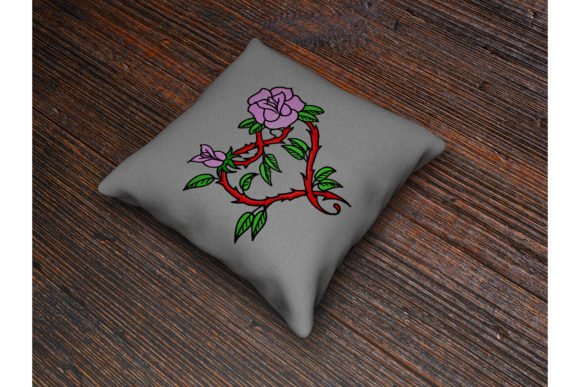
If you’re an Etsy seller or run a small shop product line, Wild Rose is quietly versatile. It reads as both timeless and contemporary—ideal for branding that avoids trends but still feels intentional. I used it on pillow covers for a nursery collection, and customers consistently commented on how “calm” and “grown-up” the embroidery felt compared to busier florals.
For custom apparel, it works especially well on relaxed-fit sweatshirts and oversized tees—centered on the chest or subtly placed near the hem. On baby embroidery, it adds gentle sophistication without saccharine sweetness. And for holiday embroidery or personalized gifts? Pair it with a simple monogram or date in a clean sans-serif, and you’ve got heirloom-level warmth.
It also translates cleanly into printable mockups. Because the shape is distinct but uncluttered, it holds up in black-and-white previews—critical when your buyer is scrolling through dozens of digital embroidery files on a mobile screen.
Design Integrity Meets Practical Judgment
What makes Wild Rose stand out isn’t technical flash—it’s thoughtful restraint. The digitizer (credited as “h” from Digital Creation Art Studio) avoided overloading the design with decorative stitches or dense underlay. That means less thread consumption, faster stitch-out times, and fewer chances for tension-related hiccups on home machines.
But restraint requires attention. Before stitching your first finished product, do these five things:
- Test the design on scrap fabric matching your final project’s weight and stretch.
- Check thread color contrast—especially if stitching on textured fabric where subtle tones can disappear.
- Review stitch density visually in your embroidery software; look for tight clusters near the calyx or stem base.
- Confirm which of the five available sizes best fits your intended hoop size and placement (e.g., a 4x4 hoop won’t comfortably hold the largest version).
- Inspect small details at 200% zoom—petal tips, leaf points, and stem taper should all resolve cleanly, not blur or pixelate.
And always verify licensing before selling finished items or bundling Wild Rose into your own design assets. Since it’s labeled a digital embroidery file for pillows, t-shirts, and sweatshirts, assume personal and small-batch commercial use is permitted—but confirm directly with Digital Creation Art Studio if you plan volume production or resale of the file itself.
Final Thought: A Design That Serves the Maker
Wild Rose doesn’t try to be everything. It’s not a statement piece. It’s not meant for flashy social media reels or viral embroidery challenges. It’s a reliable, respectful, and quietly expressive embroidery design—one that enhances your craft business without overshadowing your voice as a maker.
When your customer unwraps a tote bag embroidered with Wild Rose, they don’t just see a flower. They feel intention. They sense care. That’s the difference between stitching a design—and offering meaning.
If you’re curating embroidery project options for your next batch of handmade products, holiday gifts, or boutique merchandise, give Wild Rose space to breathe. Then watch how often it becomes the one customers choose—not because it’s loud, but because it feels true.