Mia Flowers: A Thoughtful Embroidery Design for Real Projects
First Impressions: Delicate, Confident, and Quietly Versatile
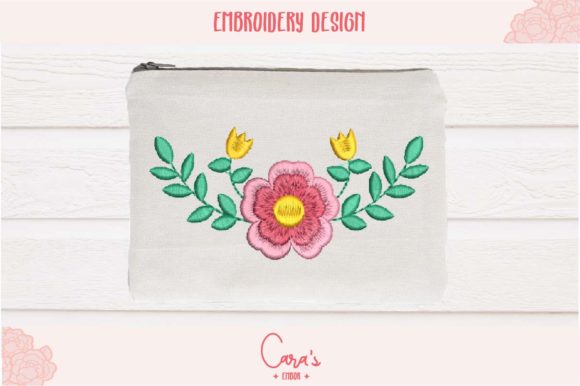
Opening the Mia Flowers embroidery file, I didn’t see a generic bloom—I saw intention. It’s a single-flower design with clean lines, gentle curves, and subtle layering that suggests depth without overloading the stitch count. There’s no frantic detail or forced realism; instead, it leans into stylized elegance—think botanical sketch meets modern textile art. The shape sits comfortably within a modest hoop footprint, and the visual weight feels balanced: not too light to disappear on a sweatshirt, not so dense it’ll buckle thin cotton or overwhelm a baby onesie. It reads as handmade, yes—but also intentional, refined, and quietly confident.
A Real Moment: Stitching Mia Flowers onto a Linen Tea Towel
Last week, I used Mia Flowers to embroider a set of linen tea towels for a local kitchen boutique. No appliqué, no backing fabric—just the design stitched directly onto midweight linen with a medium-weight tear-away stabilizer. The result? Crisp satin-stitched petals, soft fill-stitch centers, and delicate running-stitch stems that moved *with* the fabric grain instead of fighting it. Customers noticed it immediately—not because it shouted, but because it felt considered. One buyer told me she bought two: one for her own kitchen, one as a wedding gift. That’s the quiet power of Mia Flowers: it elevates the everyday without demanding attention.
Where Mia Flowers Shines (and Where It Asks for Care)
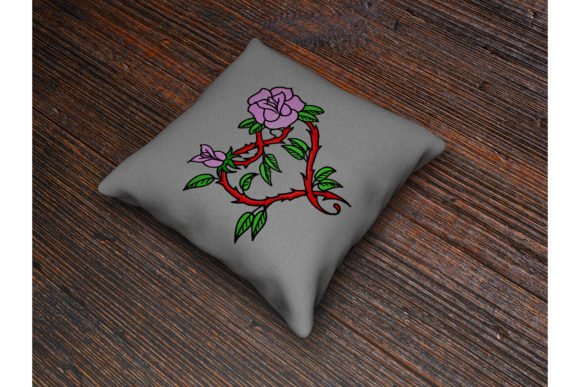
Mia Flowers works beautifully on custom apparel like lightweight sweatshirts and structured tote bags—especially when placed off-center or along a seam for subtle branding. Its scale and flow make it ideal for pillow covers, aprons, and nursery decor where softness and clarity matter more than flash. As a holiday embroidery choice, it reads gently festive (think spring birthdays, Mother’s Day, or baby showers) without seasonal cliché.
But here’s where real-world judgment kicks in:
- Small hoop sizes: Mia Flowers fits comfortably in a 4x4 hoop—but just barely. If your machine has tight tolerance or you’re stitching near an edge, test placement first.
- Textured or stretchy fabrics: On terry cloth or ribbed knit, use cut-away stabilizer and reduce top tension slightly. The stem detail can soften if the ground fabric gives too much.
- Dark or heavily dyed fabrics: Test thread colors against background tone. A pale yellow petal may vanish on navy unless you add a white underlay—or switch to ivory or cream thread.
- Curved surfaces (caps, curved pockets): Avoid placing the full design across high-curve zones. It’s better suited for flat panels—front chest, back yoke, towel hems—than crown embroidery.
- Frequent-wash items: For baby embroidery or kitchen linens, confirm stitch density isn’t overly aggressive. Mia Flowers errs toward moderate density—good for durability—but always check the actual file before scaling up.
What Mia Flowers Adds to Your Finished Product
This isn’t just another digital embroidery file—it’s a value multiplier. On an Etsy listing, Mia Flowers helps handmade product listings feel cohesive and intentional. When stitched on a personalized gift, it signals care—not just customization. For small shop owners, it supports brand consistency: minimalist enough for modern boutiques, warm enough for craft fairs. And for commercial embroidery shops, it’s a reliable go-to for clients who want “something pretty but not fussy.”
It builds trust, too. Customers recognize when a design is engineered—not just drawn—for stitchability. No floating stems. No tiny detached elements prone to fraying. No dense corners begging for skipped stitches. That reliability translates to fewer reworks, smoother client revisions, and repeat orders.
Practical Designer Notes Before You Stitch
- Always run a test on scrap fabric matching your final substrate—especially if using textured, dark, or stretchy material.
- Review stitch density visually in your embroidery software. Look for tightly packed fill areas that might cause puckering on lightweight cotton.
- Confirm hoop size compatibility. Mia Flowers is built for standard single-flower scale, but verify before hooping expensive fabric.
- Inspect small details at 200% zoom: petal tips, stem joins, and center motifs should be clean—not jagged or overly simplified.
- Test black-and-white mockups. Does Mia Flowers retain its character in monochrome? (It does—making it strong for branding or minimalist shops.)
- Compare contrast on both light and dark fabric backgrounds. Adjust thread colors accordingly—not just for visibility, but for mood.
- Use appropriate stabilizer: tear-away for stable wovens, cut-away for knits or loosely woven linens.
- If selling finished items, confirm licensing terms. This is a machine embroidery design—not a physical item—and commercial use rights vary by seller.
Final Thought: Mia Flowers Isn’t Just Stitched—It’s Chosen
You don’t grab Mia Flowers for speed or novelty. You choose it when you want your embroidery project to feel grounded, graceful, and human-made—not algorithmically perfect. It belongs on the sleeve of a hand-sewn apron, the corner of a baby blanket, the front pocket of a boutique tote. It’s the kind of embroidery file that makes customers pause, then ask, “Where did you get that?”
For Etsy sellers building a signature style, for craft business owners curating design assets, for apparel decorators balancing aesthetics and wearability—Mia Flowers earns its place not through volume or trend-chasing, but through thoughtful execution. It’s a quiet design with clear purpose. And in embroidery, that’s rare—and valuable.