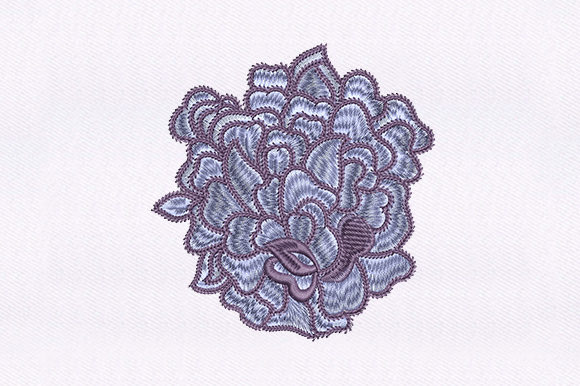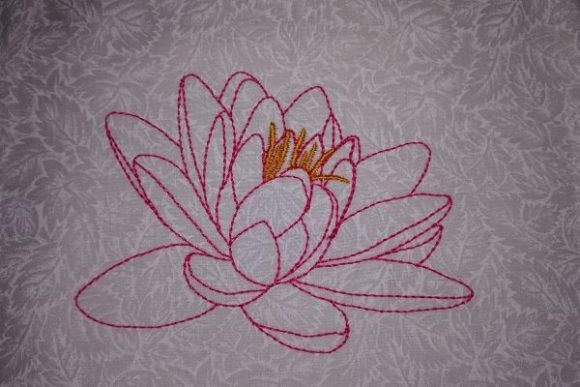
Water Lily: A Delicate Embroidery Design That Earns Its Place
First Impressions: Soft, Serene, and Surprisingly Versatile
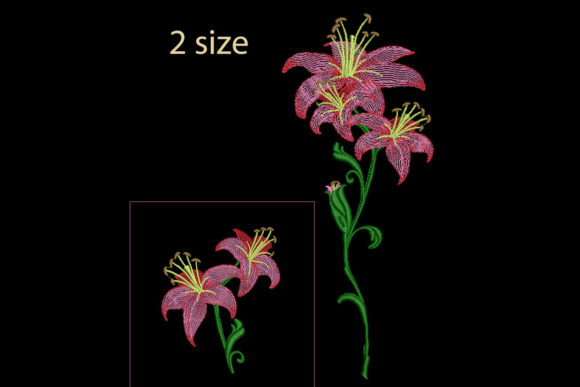
When I opened the Water Lily embroidery file, I didn’t see just another floral motif—I saw a quiet confidence in its simplicity. The shape is fluid but grounded, with gently curving petals and subtle leaf veins that suggest movement without fussiness. It’s not fussy or overly detailed, which immediately tells me it’s built for real-world stitching—not just digital prettiness. As a designer who regularly selects machine embroidery designs for client work and my own craft business, I appreciate how this one avoids visual clutter while still feeling intentional and hand-crafted. It leans into softness, yes—but not fragility. That distinction matters when you’re stitching on a baby onesie or embroidering a kitchen towel meant for daily use.
Real-Life Test: Stitching Water Lily on a Linen-Cotton Tote Bag
Last week, I used Water Lily on a custom tote bag for a local boutique—light natural linen-cotton blend, medium-weight, with visible weave texture. I chose a matte cotton thread in soft sage and ivory, and paired it with tear-away stabilizer (medium weight). The result? Crisp satin stitch edges on the petals, smooth fill stitch in the center, and running stitch accents that popped without snagging the fabric. Customers noticed it right away—not because it shouted, but because it *belonged*. That’s the mark of a well-balanced embroidery file: it enhances the item instead of competing with it. For Etsy sellers or small shop owners building a cohesive brand around calm, nature-inspired goods, Water Lily fits like a quiet signature.
Where It Shines—and Where to Pause
Water Lily performs beautifully across several common handmade product categories:
- Custom apparel: Works especially well on sweatshirt cuffs, pocket corners, or back yokes—its scale reads clearly even at modest sizes.
- Baby embroidery: Gentle curves and open negative space make it ideal for onesies and burp cloths; no dense stitch areas that could irritate sensitive skin.
- Pillow covers & tea towels: The design breathes on textured surfaces, and its balanced proportions prevent distortion on woven cotton or linen.
- Holiday or wedding gifts: Paired with neutral thread palettes, it reads as timeless—not seasonal—making it perfect for heirloom-style personalized gifts.
- Embroidered patches: Clean outer edges and moderate stitch density mean it cuts and finishes cleanly, whether sewn-on or iron-on backed.
But here’s where attention matters: avoid using Water Lily on highly stretchy knits (like lightweight jersey) without proper cut-away stabilizer and test stitching first. Its gentle curves can pucker if tension isn’t dialed in. Likewise, on dark fabrics, check that the fill stitch density is sufficient to prevent shadowing from the stabilizer showing through—especially in the center bloom. And while it scales down nicely for a cap front, skip the very smallest hoop sizes (under 3” diameter) unless you’ve verified detail retention in the actual file. Tiny stamens or fine leaf lines may vanish or merge.
What It Adds to Your Finished Product—Beyond Pretty
This isn’t just about aesthetics—it’s about perception. When customers see Water Lily stitched cleanly on a handmade apron or nursery pillow, they read intention, care, and quiet craftsmanship. That translates directly to perceived value. For craft businesses, that means higher price confidence. For Etsy sellers, it means fewer “Is this handmade?” questions—and more “How did you get it so clean?” comments. The design supports brand consistency too: if your shop centers around botanical minimalism or slow-living themes, Water Lily reinforces that story without needing explanation. And unlike busier florals, it doesn’t overwhelm photo mockups—whether you're generating printable mockups for listings or stitching samples for craft fair displays, it photographs with clarity and calm.
Practical Designer Notes Before You Stitch
Before committing Water Lily to your next project—or listing it as part of your digital embroidery file collection—here’s what I always do:
- Test on scrap fabric that matches your final substrate—especially important for textured or dark fabrics.
- Check thread color contrast in both natural and artificial light; soft pastels can disappear on ecru linen without a slight tonal shift.
- Review stitch density visually in your editing software—if the center bloom feels too sparse or too heavy, adjust fill angle or density before hooping.
- Confirm hoop size compatibility with your machine and intended placement (e.g., cap frames require different spacing than flat embroidery).
- Inspect small details like petal tips and stem junctions—they’re where quality shows or falters.
- Test black-and-white mockups to ensure legibility without color crutches.
- Use appropriate stabilizer: medium tear-away for stable wovens, cut-away for knits or lightweight silks.
- Verify licensing—if you plan to sell finished products or bundle this as part of a commercial embroidery kit, double-check usage rights. Not all Single Flowers designs permit resale of stitched items without attribution or extended licensing.
As an embroidery designer who’s evaluated hundreds of files—from over-engineered showpieces to underdeveloped sketches—I keep returning to Water Lily because it respects the craft. It doesn’t try to be everything. It’s a single flower, thoughtfully shaped, quietly capable. Whether you’re stitching a holiday gift for a friend, building inventory for your small shop, or selecting design assets for a client’s boutique branding, Water Lily earns its place—not as filler, but as finish.